How Much Backup Power Does a Storm-Ready Home Need?
A storm-ready home needs enough backup power to keep critical systems running for the full outage, plus a safety margin. The right size depends on which appliances you must support, how much energy they use each day, and whether you can recharge during bad weather. For many households, the goal is not to power everything at once but to cover refrigeration, lighting, communications, medical devices, and limited heating or cooling. By calculating loads in a simple order, you can estimate battery capacity more accurately and avoid buying too little or too much backup.
Start With the Loads You Need During a Storm
Separate Essential From Optional Appliances
Begin by listing what your home truly needs when the grid goes down. Essential loads usually include the refrigerator, freezer, Wi-Fi router, phone charging, a few lights, sump pump, garage door access, and any medical equipment. In some homes, essentials also include well pumps, security systems, or a small window AC unit. Optional loads are convenience items such as ovens, dryers, dishwashers, pool equipment, and entertainment systems. This first step matters because backup sizing becomes much clearer when you focus on survival, safety, food storage, communication, and basic comfort instead of whole-home convenience.
Account for High-Power and Startup Loads
After identifying essentials, check which devices draw a lot of power or surge when they start. Understanding the storm surge definition is also important when preparing for severe weather, as it refers to the abnormal rise of water pushed toward the shore by a storm’s winds and pressure. Refrigerators, freezers, pumps, and air conditioners often need more power for a few seconds at startup than during normal operation. That surge affects inverter sizing even if daily energy use stays moderate. Add up the running watts of appliances that may operate together, then compare startup demands for motor-driven equipment. A storm backup system must handle both. If your sump pump, fridge, and lights can overlap, the system should support that combined load without tripping or forcing you to shut something off.
Calculate Capacity for the Expected Outage
Estimate Daily Energy Consumption
Next, estimate how many watt-hours or kilowatt-hours your essential loads use in one day. Multiply each appliance’s wattage by the number of hours you expect to run it. A 100-watt device used for 10 hours consumes 1,000Wh, or 1kWh. Repeat that for every essential item, then total the results. This number gives you the daily energy budget your battery must cover. Storm planning works best when you use realistic runtimes rather than nameplate assumptions. A fridge cycles on and off, while lights, routers, and medical devices may run steadily for much longer.
Match Battery Capacity to Outage Duration
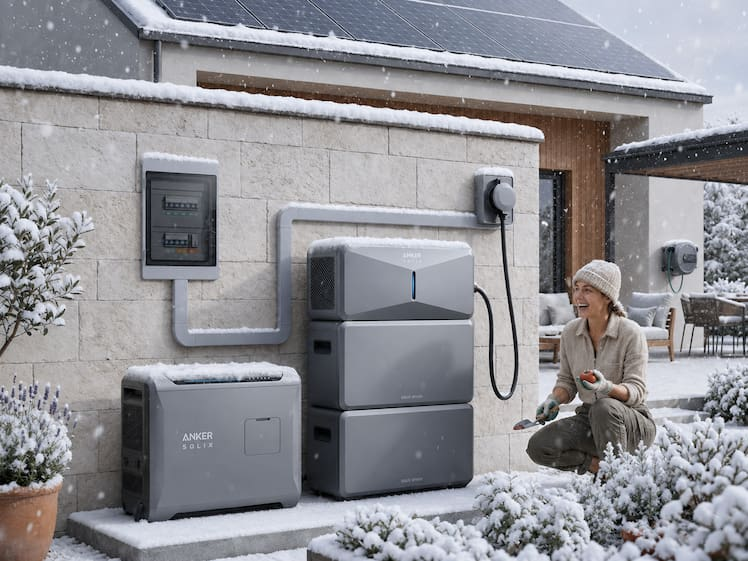
Once you know daily use, multiply it by the number of outage days you want to cover. If essentials require 8kWh per day and you plan for three days, target at least 24kWh before reserve considerations. This is where expandable systems can make planning easier. Anker SOLIX E10 whole-home backup offers 6-90kWh battery expandability and 9-27kW solar input. E10 proactively monitors severe weather and charges itself to full capacity using solar and grid power-so you don’t have to. Those ranges help households size for short interruptions, multi-day storms, or broader whole-home backup needs.
Leave a Reserve for Changing Conditions
Storm outages rarely follow a perfect plan, so reserve capacity is essential. A freezer may run harder in hot weather, a furnace fan may cycle longer in cold conditions, and family members often use more lighting and charging during an emergency. Build in extra stored energy rather than sizing to the exact math. A practical target is enough backup for your calculated need plus additional capacity for unexpected use and system losses. That reserve reduces stress and prevents deep battery depletion late in an outage, when weather, road access, and utility restoration timelines may still remain uncertain.

Prepare for Longer Storm-Related Power Loss
Extend Runtime by Managing Household Loads
The easiest way to stretch backup power is to manage demand actively. Turn off nonessential circuits, delay laundry, limit cooking with high-wattage appliances, and keep refrigerator and freezer doors closed. Use LED lighting, charge devices during daylight if solar is available, and cool or heat only occupied rooms when possible. Small adjustments add meaningful runtime over several days. You can also stagger appliance use to avoid overlapping heavy loads. This approach helps a battery system last longer without sacrificing core needs, especially when storms disrupt utility crews, fuel deliveries, or road access for more than expected.
Add Solar Charging or Expandable Storage
For extended outages, recharge capability matters almost as much as stored energy. Solar can restore part of your daily consumption, reduce battery drain, and improve resilience during multi-day weather events. Even limited production can keep essentials running if you manage loads carefully. Expandable storage adds another layer of protection by increasing how long the home can operate before recharging becomes urgent. This combination works especially well for regions with repeated storm seasons. When planning, consider not only peak sunshine but also cloudy-day output, roof space, and whether your system can scale as household energy needs change.
Conclusion
A storm-ready home needs backup power sized around essential loads, realistic daily energy use, and the longest outage you expect to face. Start by separating must-run appliances from optional ones, then account for startup surges, battery reserve, and any opportunity to recharge with solar. That process gives a clear answer: buy enough capacity to cover your essentials for the full outage window with extra margin, not just the minimum daily total. If storms in your area regularly cause long blackouts, prioritize scalable storage and solar input. Good backup planning turns uncertainty into a practical, measurable energy plan.