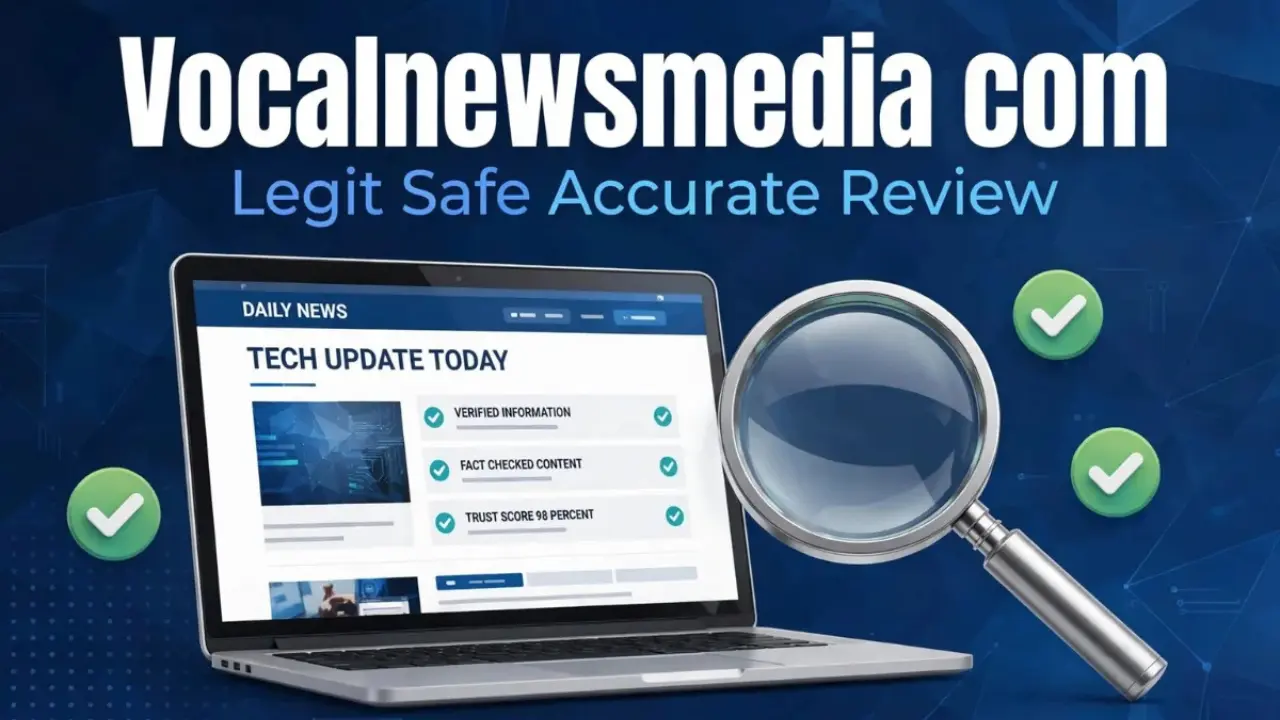
VocalNewsMedia Com Ownership, Safety, And Credibility
VocalNewsMedia com appears to be a domain name associated with a media or news-style website, but a domain name alone does not establish who operates it, whether it is active, or how reliable its content is. Before relying on a site, sharing an article, creating an account, or entering personal information, check the actual site’s publisher details, editorial standards, security, and reputation.
Names that combine words such as “vocal,” “news,” and “media” can sound like established publications. That impression is not proof of ownership, journalistic practices, or legitimacy. The most useful approach is to evaluate the specific website and the individual content you are viewing.
What can be confirmed from a domain name?
A domain is an internet address. It can indicate a website’s chosen name, but it does not reliably reveal the organization behind it. A domain may be used by an active publisher, a small independent project, a parked page, a business with an unrelated purpose, or no active service at all.
Without verified publisher information, it would be inaccurate to describe VocalNewsMedia Com as a particular company, newsroom, service, or source of news. The site itself should provide enough information for visitors to understand who is responsible for it.
Chaturbate Ebony Profiles And Live Cam Info
What a trustworthy news or media site should show
A credible publication usually makes its accountability visible. This does not mean every useful site must be a large national newsroom. Smaller outlets, specialist publishers, and independent writers can also publish strong work. The key is whether readers can identify the people and standards behind the material.
- Publisher identity: a clear owner, organization, editor, or responsible publishing team.
- Contact information: a working way to reach them beyond a generic comment form.
- About page: an explanation of the publication’s mission, coverage, and staff or contributors.
- Authorship: bylines that identify who wrote or reported an article.
- Dates and updates: visible publication dates and corrections or update notes where appropriate.
- Editorial standards: a corrections policy, sourcing approach, or other statement of how accuracy is handled.
- Privacy and terms pages: especially where the site collects accounts, newsletter sign-ups, comments, or payments.
The absence of one item is not automatic proof of fraud. Still, several missing basics make it harder to judge the site and should lower your confidence in consequential claims.
Jameliz Erome Age, Career, Income And Lifestyle
How to check VocalNewsMedia Com safely
Open the address carefully and assess the page before interacting with it. Do not assume a similar-looking spelling, an unfamiliar subdomain, or a social-media link leads to the intended site.
- Check the address bar. Confirm the spelling and look for HTTPS. A browser’s lock icon means the connection is encrypted; it does not prove that the publisher is trustworthy.
- Read the About and Contact pages. Look for a named publisher, staff details, a real contact channel, and a clear explanation of the site’s purpose.
- Inspect a few articles. Check whether they have bylines, dates, original reporting, links to primary sources, and specific evidence for their claims.
- Search for independent references. Look for coverage, profiles, or citations from established organizations that identify the operator. Treat copied directory listings and anonymous review pages cautiously.
- Check authors separately. A name on a page is more useful when it links to a consistent biography, prior work, and a way to verify the person’s role.
- Compare important claims. For breaking news, health, public safety, money, or political claims, verify the information with original documents or multiple independent, reputable outlets.
- Limit what you submit. Do not enter passwords, card details, identity documents, or unnecessary personal data until the site’s operator and purpose are clear.
How to evaluate an article, not just the website
Even a recognized outlet can make an error, and an unfamiliar site can sometimes link to useful material. Evaluate the article in front of you rather than relying only on its design or name.
Look for a traceable basis for the claim
Strong reporting separates what is known from what is alleged or uncertain. It identifies relevant documents, named sources, official statements, data, or direct reporting. For major claims, ask whether the article lets you locate the underlying source.
Be careful with articles that cite only unnamed “reports,” vague social-media posts, screenshots without context, or other websites that merely repeat the same statement. Repetition does not independently confirm a claim.
Check the date and context
Old stories often return online with new captions. Read the publication date, determine whether the event is current, and check whether later reporting changed the picture. A headline can be technically true while leaving out important limits, timing, or counterevidence.
Separate reporting, opinion, and promotion
News reporting, commentary, sponsored content, press releases, and affiliate recommendations serve different purposes. Reliable publishers label these categories clearly. A page designed mainly to sell a product or drive clicks should not be treated as independent reporting without additional verification.
Common warning signs that deserve caution
No single sign settles whether a website is unreliable. A pattern of problems matters more than one imperfection. Be especially cautious when a page combines several of the following:
- dramatic claims with little supporting evidence;
- headlines that promise a shocking revelation but do not deliver details;
- no author, no publisher information, or no meaningful contact route;
- large numbers of intrusive ads, pop-ups, redirects, or download prompts;
- copied articles, mismatched images, or obvious factual errors;
- pressure to act quickly, pay, install software, or disclose private information;
- links that lead to unrelated pages or unfamiliar payment forms; and
- claims that cannot be found in primary sources or independent reporting.
A polished layout, a professional-sounding name, a high follower count, or a secure connection should not override these concerns. Those details are easy to imitate and do not demonstrate editorial quality.
Privacy and account safety
Reading a public page generally requires less trust than registering, subscribing, commenting, downloading a file, or making a payment. Treat each action according to the data and access it requires.
Use a unique password for any new account. Avoid signing in through a primary email or social account unless you understand what permissions are requested. If a page unexpectedly asks for payment details, a software download, browser notifications, or a login to view ordinary news content, pause and verify the request through an independently confirmed channel.
Browser security tools and reputable device protection can help flag known dangerous pages, but they cannot judge the truthfulness of every article. Critical reading remains necessary.
Why a “.com” ending does not verify a publisher
The .com ending is a widely used top-level domain. It is available to many types of registrants and does not indicate that a site is an official news outlet, a registered company, or an editorial organization. The same is true of most domain endings.
Registration records may sometimes offer useful technical or ownership clues, but privacy services can lawfully hide registrant details. A private registration record is therefore not proof of wrongdoing. It is simply one piece of context, best considered alongside transparent site information and the quality of its published material.
What to do if you found a questionable link
If a link associated with VocalNewsMedia Com arrived unexpectedly by email, text message, or direct message, do not rely on the message alone to establish trust. Avoid forwarding it before you have checked the claim and destination.
If you already entered a password on a page you now distrust, change that password promptly anywhere else it was reused and enable multi-factor authentication where available. If payment information or identity documents were shared, contact the relevant provider or institution through contact details you obtain independently, not through the suspicious message or webpage.
Frequently asked questions
Is VocalNewsMedia Com an official news organization?
A domain name alone cannot establish official status. Check the site’s publisher information, editorial disclosures, authors, and independent references before treating it as an authoritative news source.
Does HTTPS mean the site is safe and accurate?
No. HTTPS helps protect data in transit between your browser and the site. It does not verify the accuracy of articles, the identity of the publisher, or the safety of every action the site may request.
Can I trust an article without a byline?
Anonymous or staff bylines are not always improper, particularly for brief updates. But for important claims, a missing author makes accountability harder to assess. Seek supporting reporting and primary evidence.
How can I verify a news claim quickly?
Search for the original statement, document, agency notice, or interview; then compare coverage from independent, established sources. Check dates, names, and the full context before sharing it.
Should I create an account to read content?
Create an account only if the publisher and its privacy practices are clear and the account is genuinely needed. Use a unique password and provide only the information necessary for the service.
Final thought
VocalNewsMedia com should be assessed as a specific website, not assumed to be reliable or unsafe solely because of its name. Clear ownership, identifiable authors, transparent policies, sound sourcing, and safe site behavior are useful signs. For claims that could affect health, safety, money, or public decisions, verify the underlying evidence before relying on or sharing the information.