Brumeblog Com How Assess It Safely
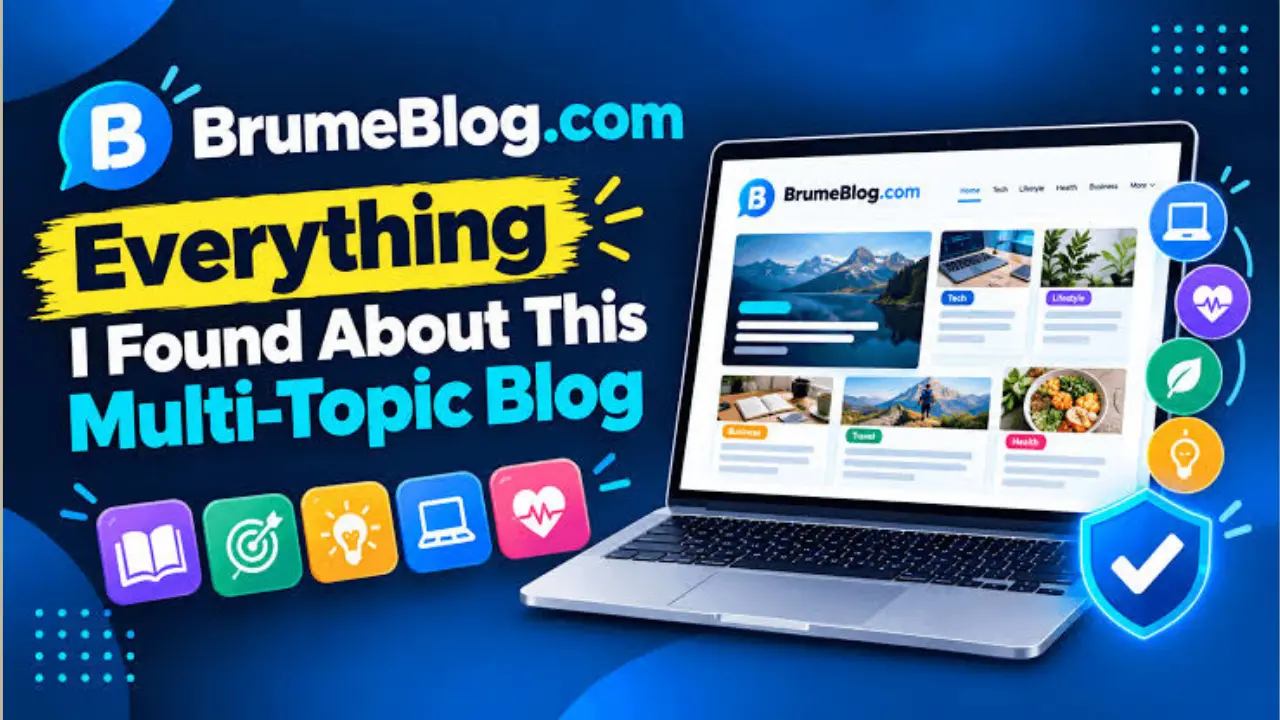
Brumeblog com appears to be a domain-style name rather than a widely established term with one confirmed public meaning. Without a clearly verifiable official description, it is best treated as a website that should be checked directly before you rely on its content, create an account, download files, or provide personal information.
A domain name alone does not prove who runs a site, what it publishes, or whether it is trustworthy. The most useful approach is to identify the site’s purpose from its own pages, then assess its transparency, security, and claims.
What is Brumeblog Com?
Brumeblog Com is written like the address of a website. The name may suggest a blog or publishing site, but that is only an inference from the wording—not confirmation of its owner, topic, services, or editorial standards.
Websites can change hands, be redesigned, stop operating, or display different material by region or over time. For that reason, avoid assuming that descriptions found on third-party pages still match the live site. Open the site carefully and use its own About, Contact, Privacy, and Terms pages to understand what it says it is.
How to identify a website’s purpose
A legitimate site should make its basic purpose understandable without requiring a visitor to sign up or share sensitive details. Start with the homepage and look for a clear explanation of the content, service, or product offered.
- About page: Look for the publisher, organization, author, or team behind the site.
- Contact details: Check whether there is a working contact method and whether it fits the site’s claimed identity.
- Editorial information: Content sites may explain who writes or reviews articles and how corrections are handled.
- Privacy policy: This should explain what data the site collects, why it collects it, and how it is used.
- Terms or service details: These are especially relevant if the site sells products, accepts subscriptions, or offers an account.
Missing pages do not automatically establish that a site is unsafe. Still, a lack of basic transparency is a reason to be more cautious, particularly when money, account credentials, downloads, or personal data are involved.
Chaturbate Ebony Profiles And Live Cam Info
How to check Brumeblog Com before interacting with it
Use a few simple checks before going beyond ordinary reading. They can help separate a normal informational site from one that deserves closer scrutiny.
Confirm the exact web address
Check the spelling in the browser’s address bar. Lookalike domains can use extra words, altered spelling, unusual endings, or characters that resemble familiar letters. A similar-looking address is not necessarily connected to the intended site.
Also confirm that the connection uses HTTPS. Modern browsers normally show a padlock or connection indicator for encrypted connections. HTTPS helps protect information sent between the browser and the site, but it does not prove that the operator or the content is reliable.
Jameliz Erome Age, Career, Income And Lifestyle
Read beyond the homepage
Visit a few internal pages rather than judging a site from its design alone. Look for consistent navigation, clear authorship where appropriate, readable policies, and content that matches the site’s stated purpose.
Be alert if every page pushes an immediate registration, payment, download, or messaging-app contact without explaining what is being offered. Pressure and vagueness are more meaningful warning signs than a plain or imperfect visual design.
Evaluate the content itself
For articles and blog posts, consider whether the writing identifies an author or publisher, separates opinion from factual reporting, and gives enough context to assess claims. Be careful with pages that make dramatic promises, use copied-looking text, contain many unrelated topics, or present claims without any supporting explanation.
For health, legal, financial, or safety-related topics, verify important information with reputable specialist or official sources. A blog can be useful for general ideas, but it should not be the only basis for a high-stakes decision.
Check what the site asks from you
Consider whether the requested information is necessary for the task. Reading a public article should not normally require a government ID, banking credentials, recovery codes, or access to unrelated accounts. A request for unusual permissions or sensitive information should prompt you to stop and verify the site independently.
Signs that call for extra caution
No single signal can reliably label a website as legitimate or fraudulent. A combination of issues is more concerning. Pause before interacting further if you notice several of the following:
- No clear explanation of who operates the site or how to contact them.
- Claims that sound unusually broad, guaranteed, urgent, or difficult to verify.
- Pop-ups urging immediate action, payment, installation, or login.
- Unexpected downloads, especially executable files or browser extensions.
- Requests for passwords, one-time codes, card details, or identity documents without a clear need.
- Links that lead to unrelated pages or repeatedly redirect the browser.
- Policies that are missing, incomplete, or inconsistent with the service being offered.
- Content filled with copied text, obvious errors, or misleading impersonation of another brand or institution.
These signs do not replace a technical security review. They are practical reasons to limit what you share until you can verify the site’s identity and purpose.
Protecting your privacy while browsing
You can inspect most public websites without providing personal details. Keep the interaction limited until you are comfortable with who runs the site and what it needs from you.
| Situation | Safer approach |
|---|---|
| Reading public content | Do not sign in unless an account is genuinely useful and the site is transparent. |
| Creating an account | Use a unique, strong password that is not reused on important accounts. |
| Receiving newsletters | Consider using an email address you can manage separately from essential accounts. |
| Downloading a file | Verify why the file is needed, check the file type, and scan it with current security software. |
| Making a payment | Confirm the seller’s identity, return and support information, and the checkout address before paying. |
A password manager can help create and store unique passwords. Turning on multi-factor authentication, when offered by a service you trust, adds protection if a password is exposed.
Be careful with downloads, subscriptions, and payments
Extra caution is appropriate when a site moves beyond publishing information. A download may install software; a subscription may collect ongoing payments; and a checkout page may handle financial data.
Before downloading anything, make sure the file is expected and relevant to the page. Avoid files delivered through aggressive pop-ups or prompts claiming that your device needs an urgent update. Browser and operating-system updates should generally come through their official update channels.
Before paying, confirm the total price, renewal terms, cancellation process, and available support details. Do not send money or share payment details merely because a timer, warning, or limited-time message creates pressure. If the site claims to represent a known business or public institution, compare its details with the organization’s official communications.
How to verify claims found on a blog
Blogs can offer commentary, tutorials, news summaries, and personal viewpoints. Their reliability depends on the publisher and the subject. Treat major claims as starting points for further checking rather than final proof.
- Identify the specific claim, date, author, and any organization named in the post.
- Look for the original announcement, documentation, study, or official record where relevant.
- Compare coverage from more than one independent, reputable source.
- Check whether the information is current and whether later updates changed the situation.
- Separate facts from predictions, opinions, promotional statements, and anecdotes.
This process matters most for claims that could affect your health, finances, safety, rights, or security.
What to do if you already shared information
If you entered a password on a site you now distrust, change that password immediately anywhere it was reused. Review account activity and enable multi-factor authentication where available. If you shared card or bank information, contact the relevant financial institution through a known official channel and follow its security guidance.
If you downloaded a suspicious file, disconnecting from the internet may limit further activity while you run a security scan or seek qualified technical help. Keep records of emails, receipts, screenshots, and messages if you need to report the issue to a platform, payment provider, or appropriate consumer-protection body.
Frequently asked questions
Is Brumeblog Com a verified company or publication?
A domain name by itself does not verify a company, publisher, or service. Check the live site’s ownership disclosures, contact details, policies, and independent references before treating it as an established organization.
Is an HTTPS padlock enough to show a site is safe?
No. HTTPS indicates that the browser connection is encrypted. It does not confirm that the site’s claims, operators, products, or requests for information are trustworthy.
Should I create an account to view the site?
Only if there is a clear reason and you are comfortable with the site’s identity and privacy practices. Avoid reusing a password from email, banking, work, or other important accounts.
Can I trust articles published on an unfamiliar blog?
Trust should depend on the topic, author transparency, evidence, and independent confirmation. Verify important claims outside the blog, especially where inaccurate information could cause harm or loss.
What should I do if a website asks for a one-time verification code?
Do not share a code sent by your bank, email provider, or another account service unless you personally initiated the exact login or transaction and have verified the destination. Such codes can be used to take over accounts.
Bottom line
Brumeblog com should be evaluated as a website, not assumed to be a particular business, publication, or service based on its name alone. Read its disclosures, verify significant claims elsewhere, and keep personal data, passwords, downloads, and payments protected until you have a clear reason to trust the site.